The path to becoming a Professional Safari Guide
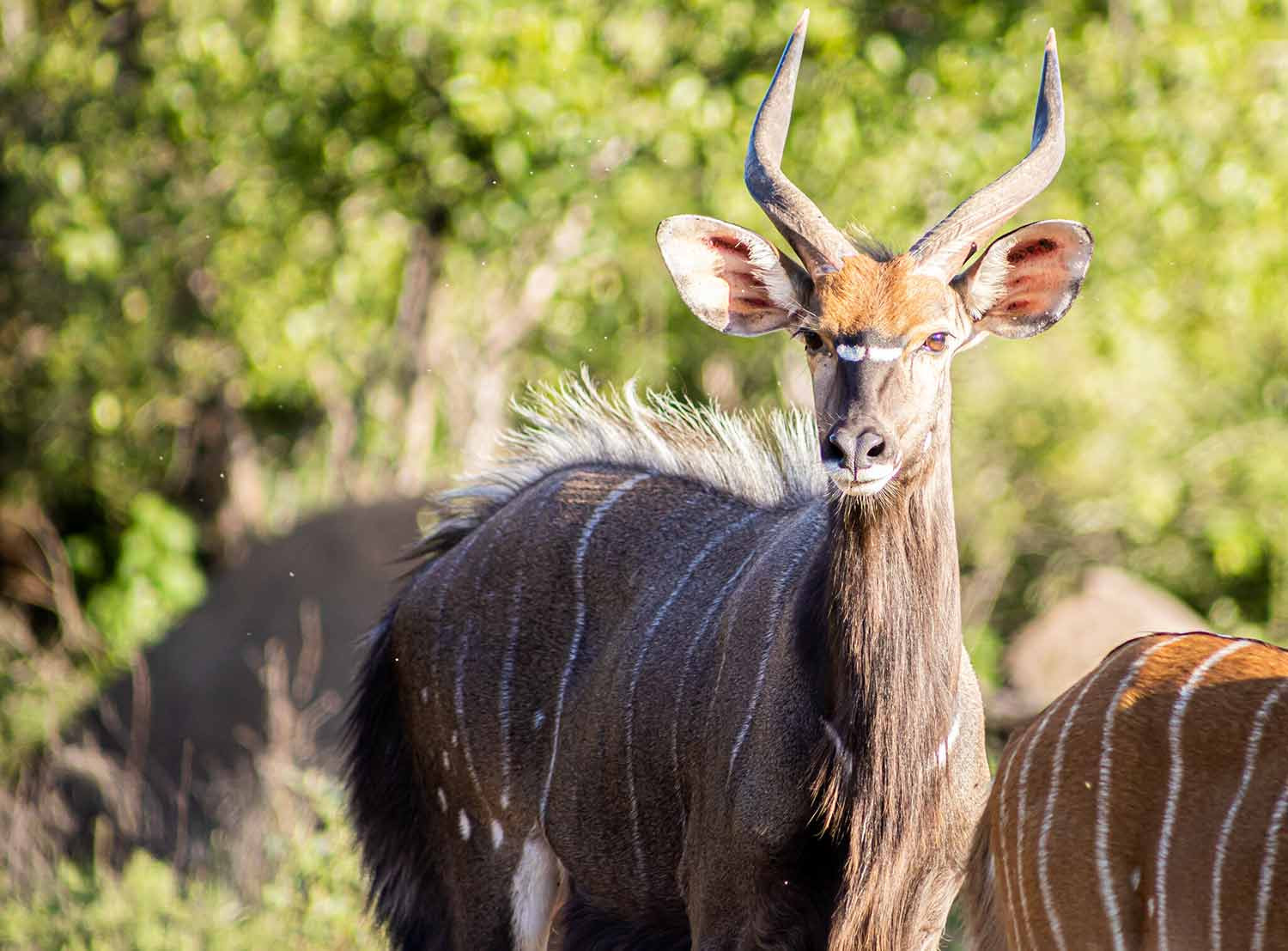
Few careers make you feel as alive as field guiding. It’s a job where your office changes with the sunrise, your meetings happen around a fire under the stars, and your “daily routine” might include tracking elephants, listening to lions calling in the distance, and sharing stories with guests who are experiencing the African bush for the first time.
But behind the magic, there is a clear professional pathway built on training, qualifications, and experience.

What qualifications do you actually need to guide?
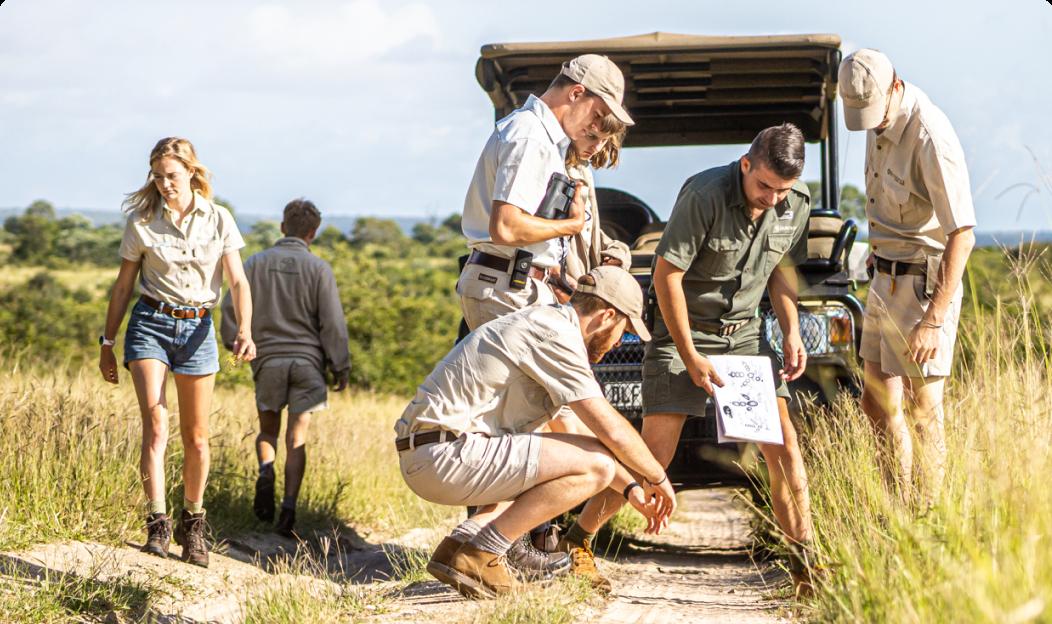
This is really where the journey begins. It’s the essential foundation that teaches you how to move safely in wild spaces, understand the basics of ecology, and start interpreting the natural world for your guests.
Understanding the NQF Levels
When you look at CATHSSETA-accredited courses, you’ll see them broken down by National Qualifications Framework (NQF) levels. Think of these simply as milestones as you gain experience in your career.
NQF Level 2 (Nature Site Guide): This is your official starting point. It is the baseline certificate that gets your foot in the door, lets you register with the government, and allows you to start working at a lodge. Your training here is all about moving safely in wild spaces, learning basic ecology, and figuring out how to explain the bush to guests.
NQF Level 4 (Advanced Nature Site Guide): This is a higher level designed for senior guides. It recognises deeper field knowledge and better guiding skills. Crucially, you cannot skip straight to this level; you can only take your NQF4 assessment after you have finished a full year of active, hands-on guiding experience out in the field.

The Path to Walking Safaris (Trails Guiding)
For a lot of guides, the ultimate goal is to take guests out on foot. To do this safely in areas with iconic wildlife like the Big 5, you need a trails guiding certification.
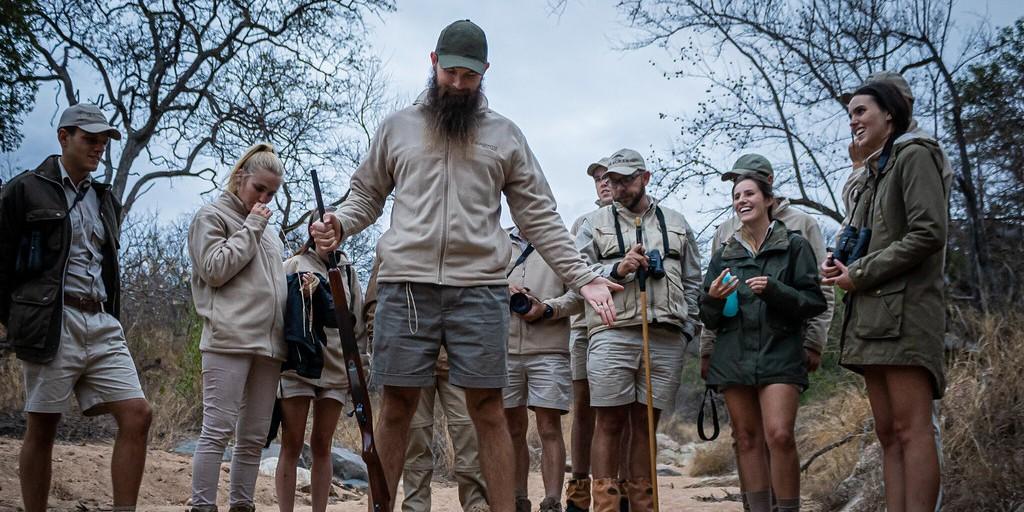
Step 1: Foundational Trails Guide: This is where you learn how walking safaris work. At this stage, you do not lead walks by yourself – you assist an Advanced Trails guide. The focus here is on building your awareness and learning to walk in a Big 5 environment, safely.
Step 2: Advanced Trails Guide: Once you have logged your foundational hours and ticked all the boxes, you can take an assessment to qualify to lead walks independently. At this level, you take full responsibility for guiding guests on foot through big game territory.
You can learn more about the different stages here.

Where IFGA fits in
It develops skills like:
- Storytelling that brings the bush to life
- Reading guests and adapting to different personalities
- Communicating with confidence and warmth
- Creating a sense of connection, comfort, and wonder
- Elevating every moment, from game drives to dinner conversations
It’s the difference between a guide who is qualified and a guide who truly leaves a lasting impression.

Field guiding is a profession built on knowledge, but powered by feeling.
It’s early mornings when the bush is still quiet, the excitement of fresh tracks in the sand, and that moment of silence when guests see wildlife up close for the first time. And just as importantly, it is shared dinners, stories around the fire under the stars, and the feeling that every day in the bush brings something new.
If you want to become a professional safari guide, Bushwise offers a range of accredited field guide courses from 2, 3, 6, and 12 months, designed to kickstart your career in the wild.